
Judd's Plumbing
Blog
2026-08-16
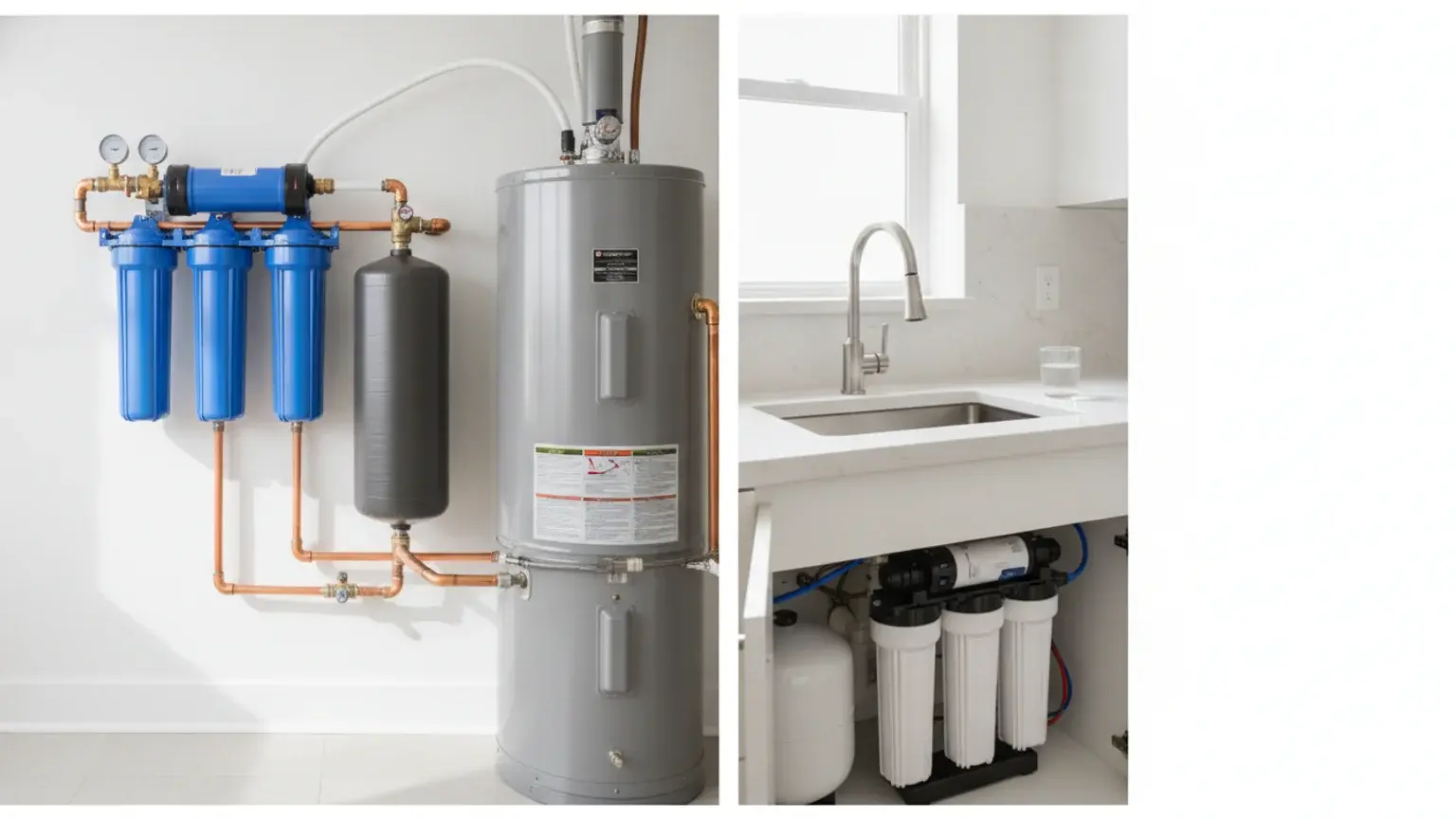
If you're tired of hard water spots, chlorine taste, or sediment in your tap water, you've probably considered adding filtration to your home. The two most popular options are whole-house water filters and under-sink water filters, and each serves a different purpose. Understanding the difference between whole-house vs under-sink water filters helps you choose the right system for your household's needs and budget.
Many homeowners in Mesa and throughout the Valley face water quality challenges unique to Arizona—high mineral content, chlorine taste, and occasional sediment. Let's break down what each system does, how much they cost, and which homes benefit most from each approach.
A whole-house water filter treats all the water entering your home at the main supply line. The system typically installs where your water line enters the house, before it branches out to individual fixtures. This means every faucet, shower, toilet, and appliance receives filtered water.
Whole-house systems use one or more filtration stages depending on your water quality concerns:
Water flows through these filters before reaching your fixtures. The typical system uses cartridge filters that need replacement every 3-12 months, depending on your water quality and household usage.
Filtered water throughout your entire home offers several advantages:
For homes with hard water issues common in Mesa, a whole-house system combined with a softener can protect your water heater, washing machine, and dishwasher from scale buildup.
Installation typically runs $1,000-$4,500 depending on system complexity:
Professional installation is essential because the system ties into your main water line and requires proper sizing, pressure regulation, and code-compliant installation.
An under-sink water filter treats water at a single point of use, typically your kitchen sink. The compact system installs in the cabinet below the sink and delivers filtered water through either your existing faucet or a dedicated filtration faucet.
Most under-sink systems use multi-stage filtration in a compact housing:
The filtered water typically comes through a separate small faucet installed next to your main kitchen faucet. Standard filters need replacement every 6-12 months, while RO membranes last 2-4 years.
Point-of-use filtration offers practical advantages for many households:
Under-sink systems make sense when your primary concern is drinking and cooking water quality rather than protecting appliances or improving bathing water.
Installation costs are significantly lower than whole-house systems:
Many homeowners with basic plumbing skills can install these systems themselves, though professional installation by our residential plumbing team ensures leak-free connections and proper operation.
| Feature | Whole-House Filter | Under-Sink Filter | |---------|-------------------|------------------| | Coverage | Every faucet and fixture | Single faucet only | | Installation Cost | $1,000-$4,500 | $150-$1,500 | | Annual Maintenance | $150-$500 | $50-$200 | | Installation Complexity | Requires professional plumber | DIY-friendly or simple install | | Water Pressure Impact | Slight reduction possible | No impact on household pressure | | Contaminant Removal | Good for sediment, chlorine, taste | Excellent, especially RO systems | | Appliance Protection | Yes | No | | Best For | Whole-home water quality | Drinking/cooking water |
The best choice depends on your specific water quality concerns and household priorities.
Whole-house systems make the most sense for families concerned about overall water quality and willing to invest in comprehensive protection.
Under-sink systems deliver excellent value when drinking water quality is your priority but you don't need whole-home filtration.
Many homeowners install both systems for comprehensive protection. A whole-house filter handles sediment, chlorine, and general water quality, while an under-sink RO system provides ultra-pure drinking water. This combination offers the best of both approaches:
Mesa and Valley residents face specific water quality challenges that influence filtration decisions:
Arizona has some of the hardest water in the country. Whole-house filtration combined with a water softener addresses this issue comprehensively. Under-sink filters don't soften water, so you'll still see scale buildup on fixtures and appliances.
Municipal water systems use chlorine or chloramine for disinfection. Both whole-house and under-sink carbon filters effectively remove these, improving taste and eliminating the swimming-pool smell.
Older neighborhoods and homes with aging infrastructure may experience sediment issues. A whole-house sediment filter protects your entire plumbing system, including your water heater and washing machine valves.
Arizona tap water typically has 200-500 ppm TDS, mostly from minerals. Standard carbon filters don't remove dissolved solids—only RO systems do. If you want low-TDS water for drinking, an under-sink RO system is your best option.
While under-sink filters can be DIY-friendly, professional installation ensures optimal performance and prevents leaks that could damage cabinets or flooring. Whole-house systems always require professional installation.
Professional installation includes:
Regular maintenance keeps your system working efficiently. Most systems have indicator lights or timers that remind you when filters need replacement. Neglecting filter changes reduces effectiveness and can damage the system.
Start by identifying your specific water quality concerns. You can request a water quality report from your municipal supplier, or have your water tested privately. Common tests measure:
Knowing what's in your water helps you choose the right filtration approach. A basic sediment and chlorine problem might need only an affordable whole-house system, while high lead levels require an RO system at your drinking water tap.
Consider your budget over time, not just upfront cost. A $2,000 whole-house system that lasts 10 years with $300 annual maintenance costs $5,000 total. A $200 under-sink system with $100 annual maintenance costs $1,200 over the same period—but doesn't protect your appliances or provide filtered water throughout your home.
Choosing between whole-house vs under-sink water filters doesn't have to be complicated when you understand what each system does and what your household needs. Many families find that starting with an under-sink filter for immediate drinking water improvement, then adding whole-house filtration later, works well for their budget and priorities.
Whether you need filtered water at a single tap or throughout your entire home, proper installation ensures your system works efficiently for years to come.

Judds Plumbing
Over 25 Years Of Plumbing Experience In The Plumbing Industry
We are an owner operated Commercial & Residential Plumbing company in Arizona. We are ready to provide Plumbing Services for all your Plumbing needs.
Our primary services areas includes: Mesa, Tempe, Chandler, Gilbert, Queen Creek, Apache Junction, Sun Lakes, Ahwatukee and Scottsdale.



ROC 340237 Specialty Dual Plumbing License CR-37
Commercial & Residential
OSHA 30 Certified
Call Justin at 623-304-5833 or 623-304-JUDD
Web Design by Gilbert Web Design Copyright 2024 all rights reserverd