
Judd's Plumbing
Blog
2026-09-16
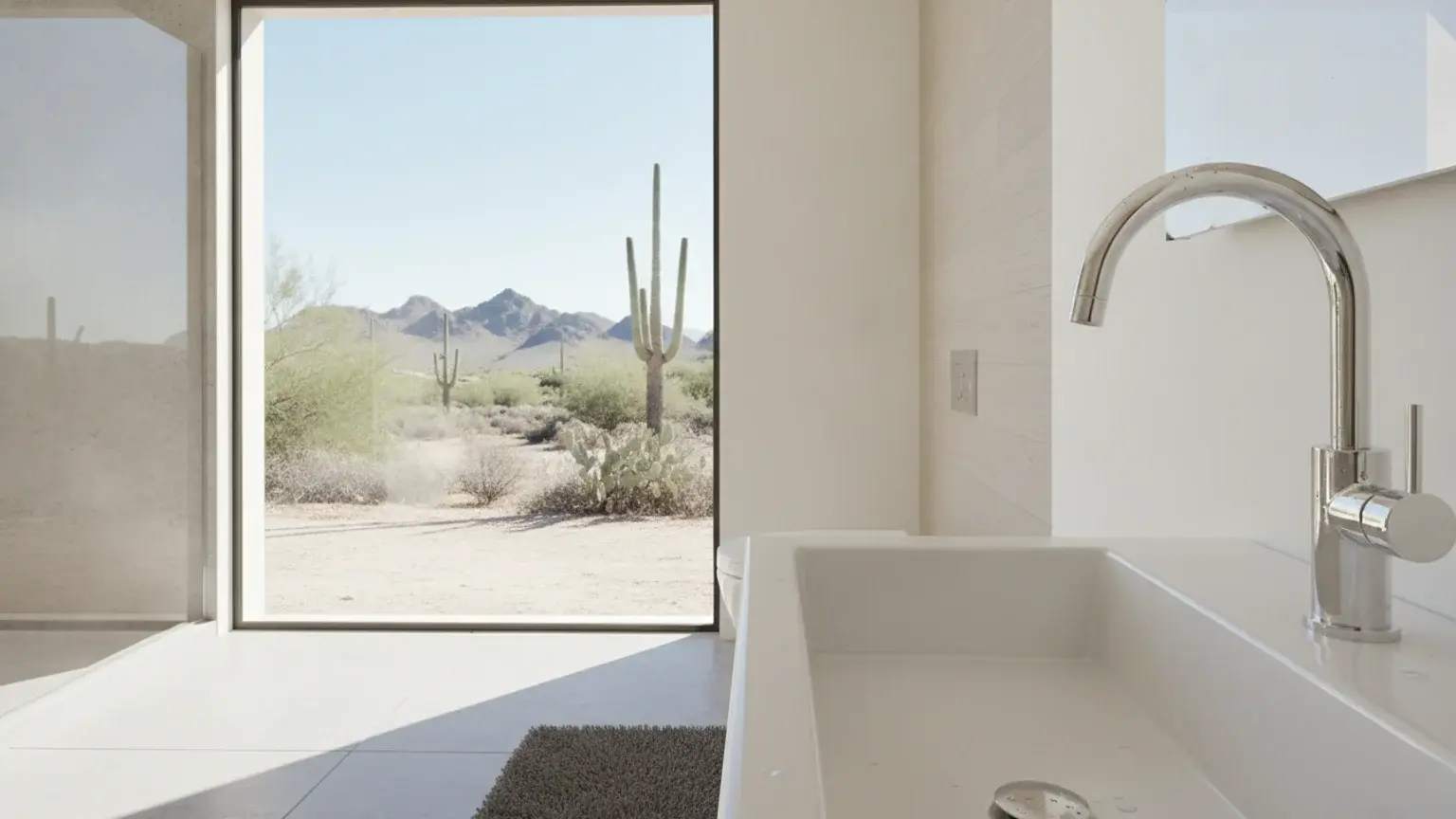
Water-saving fixtures are no longer just an eco-trend—they're a smart financial move for Arizona homeowners. With water costs rising and the desert climate putting constant pressure on our resources, upgrading to efficient plumbing fixtures can cut your water bill by 20-60% while helping preserve our precious water supply. Whether you're building new, remodeling, or simply looking to reduce your household's environmental footprint, the right fixtures pay for themselves faster than you might think.
The technology behind water-saving fixtures has evolved dramatically. Today's models deliver strong performance without the weak water pressure or sluggish drainage that plagued early low-flow designs. Homeowners across Mesa and the greater Phoenix area are discovering that modern efficient fixtures actually work better than their wasteful predecessors—all while saving thousands of gallons per year.
Arizona faces unique water challenges that make conservation essential. Our desert climate, limited water sources, and growing population mean every gallon counts. The average Arizona household uses about 130 gallons of water per person each day, with indoor water use accounting for roughly 70% of that total.
Installing water-saving fixtures addresses the biggest water wasters in your home:
The financial benefits add up quickly. With Mesa water rates averaging $3-4 per 1,000 gallons, a family of four can save $200-400 annually just by upgrading their bathroom fixtures. Factor in potential rebates from local water utilities, and your payback period often drops below two years.
Modern high-efficiency toilets (HETs) use 1.28 gallons per flush or less, compared to older models that guzzle 3.5-7 gallons. That's a potential savings of 13,000 gallons per person annually.
Dual-flush models give you two options: a partial flush (0.8-1.0 gallons) for liquid waste and a full flush (1.28-1.6 gallons) for solids. This flexibility maximizes savings without sacrificing performance.
Top-rated dual-flush toilets in 2026 include:
These toilets use air pressure to create a powerful flush with less water. They're louder than gravity-fed models but virtually never clog—ideal for busy households.
Pressure-assisted toilets use 1.1-1.28 gallons per flush and maintain strong performance even with hard Arizona water. Expect to pay $450-700 for quality models.
The latest smart toilets incorporate sensors and adjustable flush volumes based on waste detection. While expensive ($1,500-3,000), they offer maximum efficiency and luxury features like heated seats and automatic lids.
Old showerheads blast through 2.5-5 gallons per minute (gpm), while WaterSense-certified models use just 2.0 gpm or less without feeling weak. For a family taking 8-minute showers daily, switching to 1.5 gpm showerheads saves over 10,000 gallons yearly.
Modern low-flow technology uses air injection and optimized spray patterns to maintain pressure while reducing water use.
Top performers for 2026:
| Model | Flow Rate | Price Range | Key Feature | |-------|-----------|-------------|-------------| | Delta H2Okinetic | 1.75 gpm | $50-150 | Larger water droplets feel fuller | | Kohler Flipside | 2.0 gpm | $40-80 | Dual spray heads in one | | High Sierra 1.5 gpm | 1.5 gpm | $30-50 | Maximum savings, solid pressure | | Moen Magnetix | 1.75 gpm | $60-120 | Magnetic dock, handheld option |
Installation takes 15 minutes with basic tools, making showerheads the easiest water-saving upgrade. Just unscrew the old head, clean the threads, wrap with plumber's tape, and hand-tighten the new fixture.
Kitchen and bathroom faucets can waste 2-2.5 gallons per minute when running full blast. Installing aerators or upgrading to efficient faucets reduces flow to 1.0-1.5 gpm while maintaining cleaning power.
Motion-activated faucets eliminate the water wasted while soaping hands or brushing teeth—typically 30-40% of total faucet use. They're especially effective in households with children.
Quality touchless faucets cost $150-400 and include battery or AC-powered options. Delta and Moen offer reliable models with multi-year warranties.
WaterSense-certified bathroom faucets use 1.2 gpm maximum, compared to standard 2.2 gpm models. The difference is barely noticeable during normal use but saves about 700 gallons per person annually.
Budget-friendly options start around $80-150 for quality brands. Look for ceramic disc valves that resist Arizona's hard water buildup better than compression faucets.
Kitchen faucets need more flow for filling pots, so most water-efficient models use 1.5-1.8 gpm rather than the ultra-low rates suitable for bathrooms. Many include a pause button on the spray head for temporarily stopping flow without adjusting temperature.
ENERGY STAR certified washing machines use 35-50% less water than conventional top-loaders, with front-load models being the most efficient. A quality high-efficiency washer uses 13-17 gallons per load versus 23-40 gallons for older machines.
Key features for 2026:
Expect to pay $700-1,500 for a high-efficiency washer that saves 5,000-8,000 gallons annually for a typical family.
How much water goes down the drain while you wait for hot water? In Mesa homes with water heaters far from bathrooms, the answer can be 2-5 gallons every time. Over a year, that's thousands of gallons wasted.
Hot water recirculation systems keep hot water ready at fixtures, eliminating the wait. Demand-activated systems are most efficient, circulating water only when you press a button or motion sensor.
Installation costs range from $500-1,500 depending on your home's layout. Our bathroom plumbing services team can assess whether your home would benefit from this upgrade.
While not strictly a fixture, your water heater impacts overall water waste. Tankless models provide endless hot water on demand without storing heated water that cools overnight, eliminating standby heat loss.
Tankless water heaters reduce water waste because hot water arrives faster (no tank recovery time) and you never run out mid-shower, avoiding the restart-and-wait cycle. Learn more about tankless water heater installation and whether it's right for your home.
The most water-efficient fixture is one that isn't leaking. Smart leak detectors attach to your main water line and monitor flow patterns 24/7, alerting you to drips, running toilets, or burst pipes before they waste thousands of gallons.
Advanced systems like Flo by Moen or Phyn Plus ($400-700) can automatically shut off your water supply if they detect a major leak, preventing flooding damage. Basic leak sensors ($20-50 each) placed near toilets, water heaters, and under sinks provide affordable early warning.
Most aerators and showerheads are genuine DIY projects, but toilets, faucets, and leak detection systems often require professional installation to ensure proper function and avoid warranty issues.
When installing water-saving fixtures, professionals check for:
Professional installation typically costs $150-400 per fixture including labor, though many homeowners bundle multiple upgrades for better pricing. Our plumbers in Mesa can provide a comprehensive water-efficiency assessment and installation quote.
Many Valley water utilities offer rebates for water-saving upgrades, helping offset upfront costs. Programs change regularly, but typical rebates include:
Check with your local water provider before purchasing to verify current rebate programs and pre-approval requirements. Some programs require professional installation documentation.
Water-saving fixtures require minimal maintenance, but a few simple practices ensure they keep performing efficiently:
Clean aerators every 3-6 months by unscrewing them and removing mineral deposits. Arizona's hard water builds up calcium quickly, reducing flow and efficiency.
Check toilet flappers annually—even WaterSense toilets waste water if the flapper deteriorates. Drop food coloring in the tank and wait 15 minutes; if color appears in the bowl without flushing, replace the flapper.
Descale showerheads annually by soaking them overnight in white vinegar to dissolve mineral buildup that reduces pressure and spray pattern.
Test pressure-reducing valves if you have one—excessive pressure (above 60 psi) shortens fixture lifespan and increases leak risk.
For maximum water savings with minimum investment, start with showerheads and aerators—they cost under $200 total and install in an afternoon. Next, tackle toilet replacements if you have pre-1994 models using 3.5+ gallons per flush.
Budget-conscious homeowners can phase upgrades over several years, replacing fixtures as they wear out naturally. This spreads costs while steadily improving efficiency.
For new construction or major remodels, specify WaterSense fixtures from the start—the incremental cost over standard fixtures is minimal, and you'll never pay for the wasted water.
The combination of lower utility bills, environmental benefits, and improved home value makes water-saving fixtures one of the smartest investments Arizona homeowners can make. Whether you're motivated by conservation, cost savings, or both, today's technology delivers real performance without compromise.

Judds Plumbing
Over 25 Years Of Plumbing Experience In The Plumbing Industry
We are an owner operated Commercial & Residential Plumbing company in Arizona. We are ready to provide Plumbing Services for all your Plumbing needs.
Our primary services areas includes: Mesa, Tempe, Chandler, Gilbert, Queen Creek, Apache Junction, Sun Lakes, Ahwatukee and Scottsdale.



ROC 340237 Specialty Dual Plumbing License CR-37
Commercial & Residential
OSHA 30 Certified
Call Justin at 623-304-5833 or 623-304-JUDD
Web Design by Gilbert Web Design Copyright 2024 all rights reserverd