Judd's Plumbing

Blog

Asbestos in Old Pipes: What Homeowners Need to Know

12-31-2025

Asbestos in Old Pipes: What Homeowners Need to Know

Asbestos in Old Pipes: What Homeowners Need to Know

For homeowners with properties built before the 1980s, hidden hazards may lurk within the walls and under the floors—including in the plumbing system. While asbestos is commonly associated with insulation and tiles, it was also widely used in plumbing components. At Judd's Plumbing, we help Arizona homeowners navigate the complexities of asbestos-containing plumbing materials safely and responsibly, ensuring your home’s water system is both functional and safe.

Understanding Asbestos in Plumbing Systems

Asbestos was prized for its heat resistance, strength, and insulating properties, leading to its incorporation into various building materials, including plumbing components, until its health risks became widely acknowledged and regulated in the late 20th century.

Common Plumbing Materials That May Contain Asbestos:

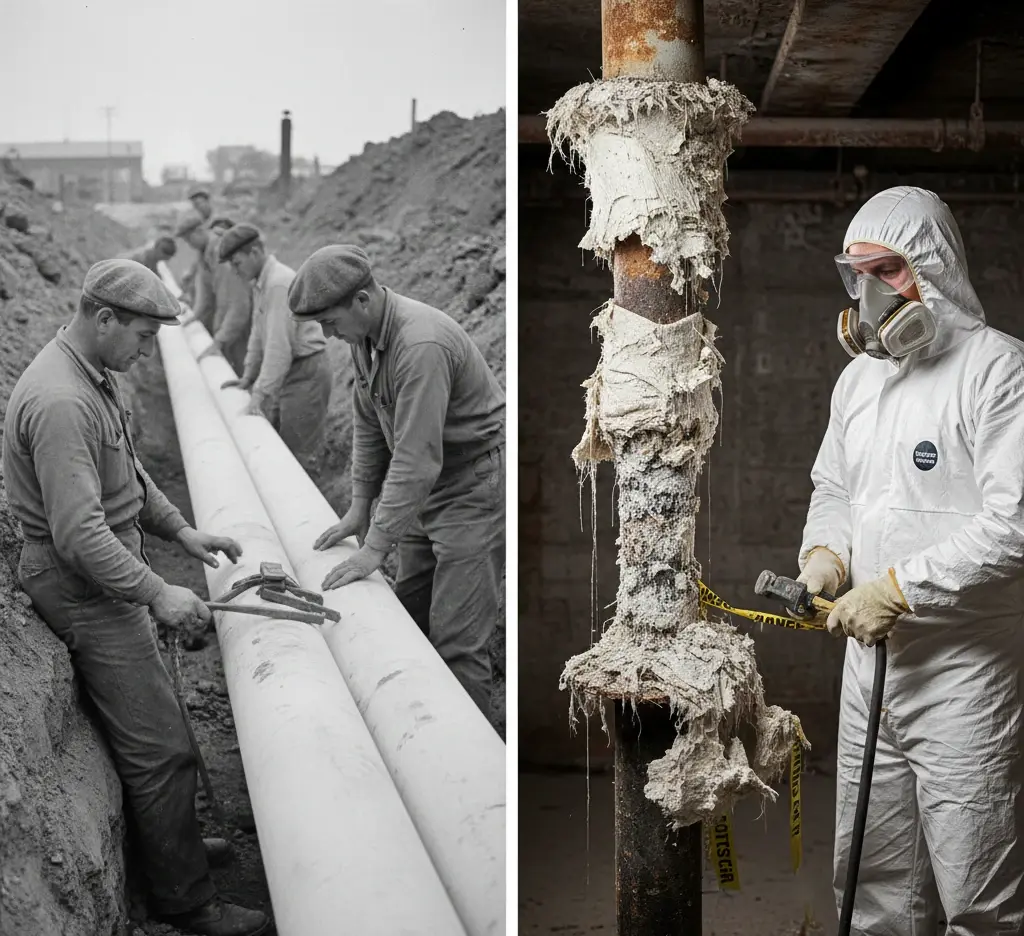
  1. Transite Pipes: Asbestos-cement pipes used for drain, waste, vent (DWV) and sometimes water supply lines from the 1940s through the 1970s. They are typically gray and have a concrete-like appearance.
  2. Pipe Wrap Insulation: White or gray corrugated or blanket insulation used to wrap heating pipes, boilers, and sometimes water pipes for thermal insulation and condensation control.
  3. Flange Gaskets and Packing: Used in pipe connections, valves, and pumps, especially in older heating systems.
  4. Cement Board and Panels: Used as a heat shield behind boilers or water heaters.

Health Risks: When Asbestos Becomes Dangerous

Intact, undisturbed asbestos-containing materials (ACMs) generally do not pose an immediate health risk. The danger arises when these materials are friable (easily crumbled by hand) and disturbed, releasing microscopic asbestos fibers into the air.

Primary Health Concerns:

  • Inhalation Risk: Airborne fibers can be inhaled and lodge deep in the lungs.
  • Latency Period: Diseases can take 20-50 years to develop after exposure.
  • Serious Illnesses: Prolonged exposure is linked to asbestosis (lung scarring), lung cancer, and mesothelioma.

Important Note: Asbestos in water pipes (like Transite) poses a risk primarily during cutting, sanding, or demolition, not from drinking water flowing through intact pipes.

How to Identify Potential Asbestos Plumbing

Signs Your Home Might Have Asbestos-Containing Plumbing:

  • Home built between 1920-1980.
  • Gray, concrete-like pipes (Transite) in the basement, crawlspace, or connected to sewer/vent lines.
  • White or gray corrugated paper or blanket insulation wrapping pipes, especially near the water heater or boiler.
  • Ongoing crumbling or damage to old pipe insulation.

What NOT to Do:

  • Do not sand, scrape, or break suspected materials.
  • Do not use a standard vacuum cleaner, as it will spread fibers.
  • Do not handle damaged insulation without proper personal protective equipment (PPE).

The Professional Process: Testing and Safe Management

Step 1: Suspect Material Identification

During a routine inspection or service call, our trained technicians can identify materials that are likely to contain asbestos based on age, appearance, and location. We will point these out to you without disturbing them.

Step 2: Recommended Testing

If disturbance is necessary for your plumbing project, we recommend:

  • Hiring a Certified Asbestos Inspector to take samples for laboratory analysis.
  • Testing is crucial before any renovation, repair, or demolition work begins.

Step 3: Safe Handling Protocols

If asbestos-containing materials must be disturbed, Judd's Plumbing follows or coordinates with abatement professionals who adhere to strict protocols:

  • Sealing off the work area with plastic sheeting.
  • Using specialized HEPA filtration equipment.
  • Wetting materials to suppress dust.
  • Our technicians using appropriate PPE (respirators, disposable suits).
  • Proper disposal at designated hazardous waste facilities.

Options for Dealing with Asbestos Plumbing

1. Leave It In Place (If Undisturbed and in Good Condition)

The safest option is often to manage it in place if it is not damaged and will not be disturbed by renovations or repairs.

2. Repair and Encapsulate

For slightly damaged pipe insulation, certified abatement professionals can repair and seal (encapsulate) the material to prevent fiber release.

3. Full Abatement and Replacement

This is necessary if:

  • The materials are severely damaged or deteriorating.
  • You are planning a major plumbing overhaul or renovation.
  • You want permanent peace of mind.

The Replacement Process Involves:

  1. Hiring a licensed asbestos abatement contractor to safely remove the hazardous materials.
  2. Judd's Plumbing then performs the planned plumbing repair or full repiping with modern, safe materials like PVC, CPVC, or PEX.
  3. Post-abatement air clearance testing to ensure the home is safe.

Why You Need a Professional Plumber for Older Homes

Attempting DIY repairs on plumbing that may contain asbestos can inadvertently create a significant health hazard for you and your family. Professional plumbers like Judd's Plumbing:

  • Recognize potential ACMs and advise on proper next steps.
  • Coordinate with certified abatement professionals when needed.
  • Handle the modern plumbing work safely and efficiently after any asbestos is removed.
  • Ensure compliance with state and federal regulations regarding asbestos.

Don't Gamble with Hidden Hazards

The safety of your home's environment is paramount. If you suspect your older home has asbestos in its plumbing system, a cautious and informed approach is essential.

Schedule a Professional Plumbing Assessment:
Call Judd's Plumbing at 623-304-5833
Visit: juddsplumbingaz.com


Safety first. When dealing with the potential of asbestos in your plumbing, trust the experienced team at Judd's Plumbing to guide you toward the right, responsible solution.
logo
Quick Links

Judds Plumbing

Over 25 Years Of Plumbing Experience In The Plumbing Industry
We are an owner operated Commercial & Residential Plumbing company in Arizona. We are ready to provide Plumbing Services for all your Plumbing needs.
Our primary services areas includes: Mesa, Tempe, Chandler, Gilbert, Queen Creek, Apache Junction, Sun Lakes, Ahwatukee and Scottsdale.


BBB Icon
Yelp Icon
Angi Icon

ROC 340237 Specialty Dual Plumbing License CR-37

Commercial & Residential

OSHA 30 Certified

Call Justin at 623-304-5833 or 623-304-JUDD

Web Design by Gilbert Web Design Copyright 2024 all rights reserverd